I have always loved ceilings and the opportunity they give us to do something unexpected.
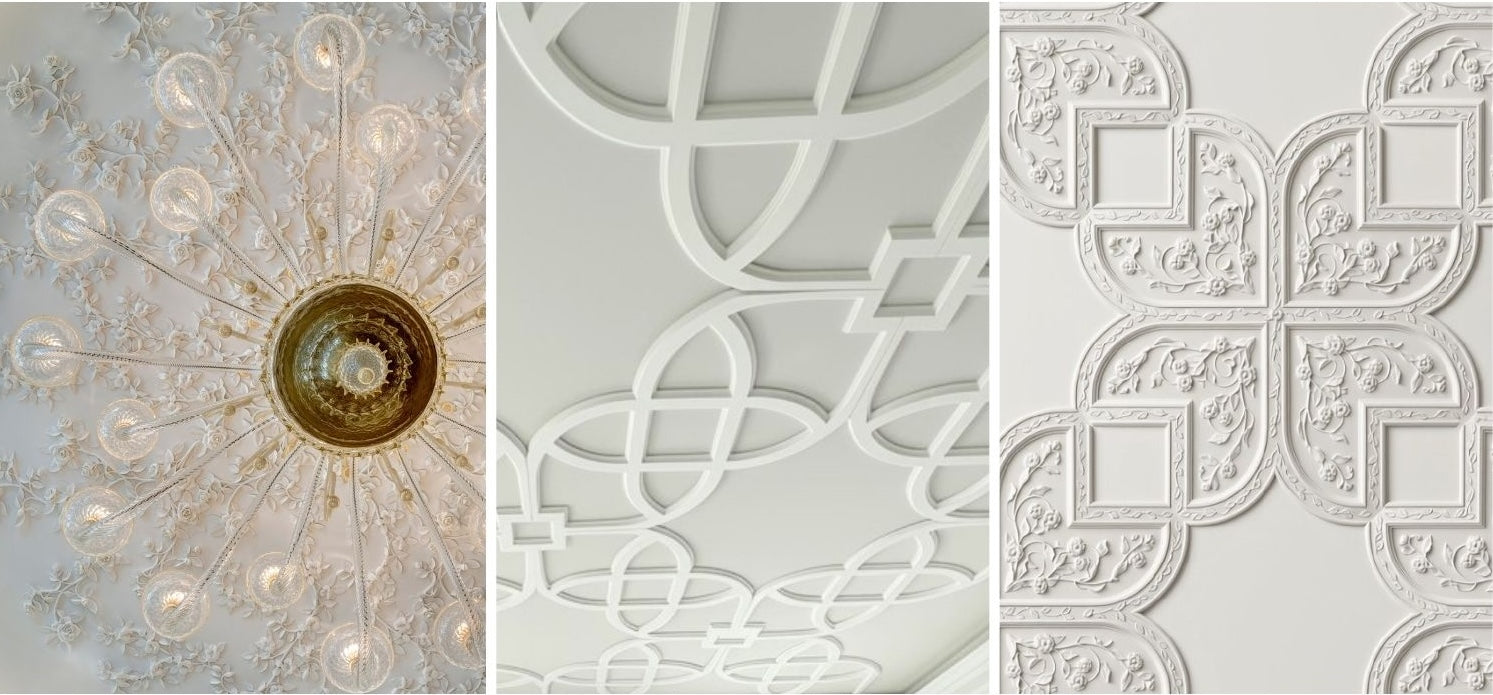
I thought it would be fun to share three very different ways we create them—from individually cast ornament, to large geometric moldings, to a new project where the sculptural panels actually become the ceiling.
Each is completely different in how it is designed and made, and each has its own challenges.
Applied Ornament
This is probably our most traditional approach.
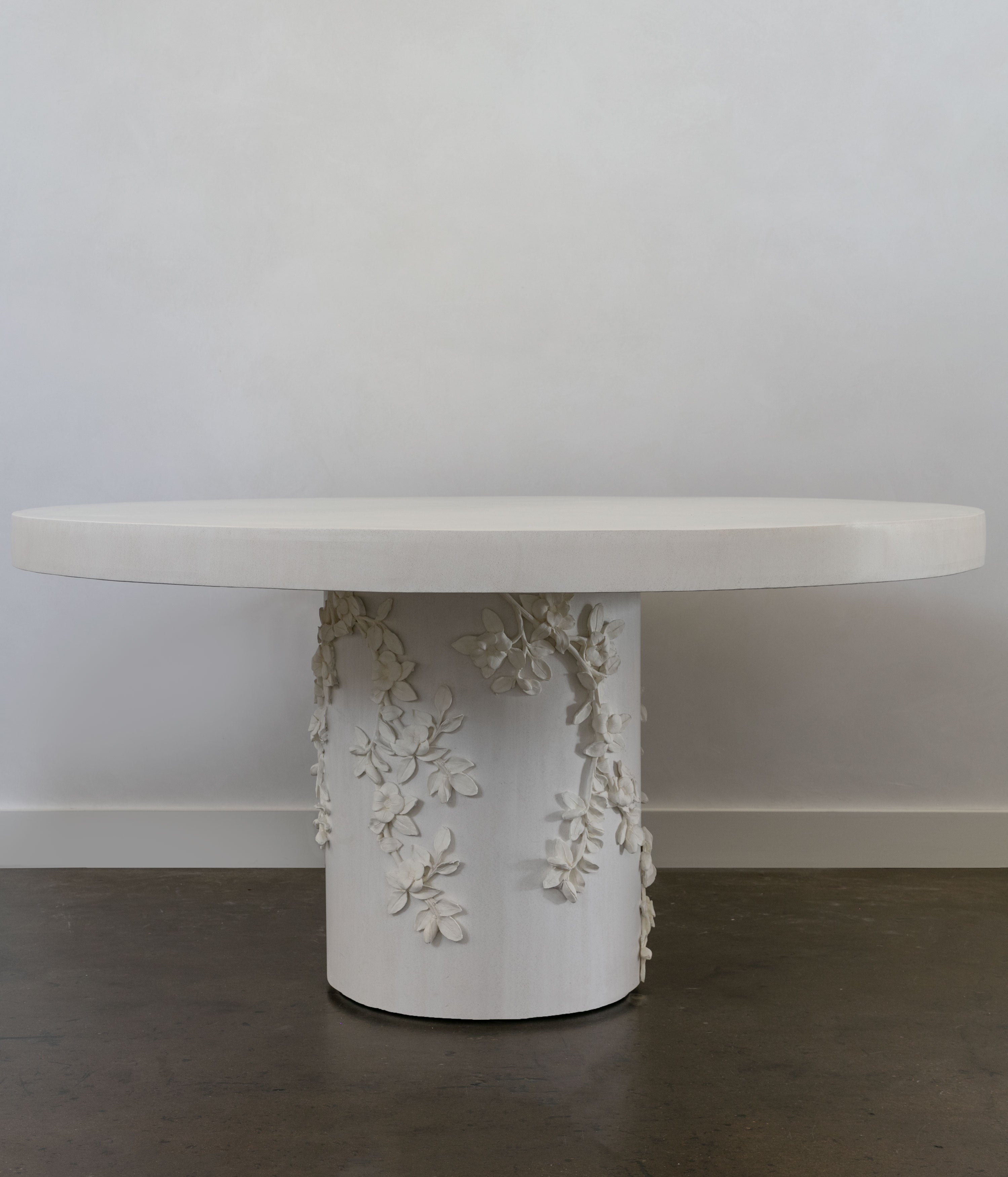
We start by sculpting the flowers, leaves, or other details in clay. From there, molds are made and the individual pieces are cast and applied to the sheetrock ceiling.
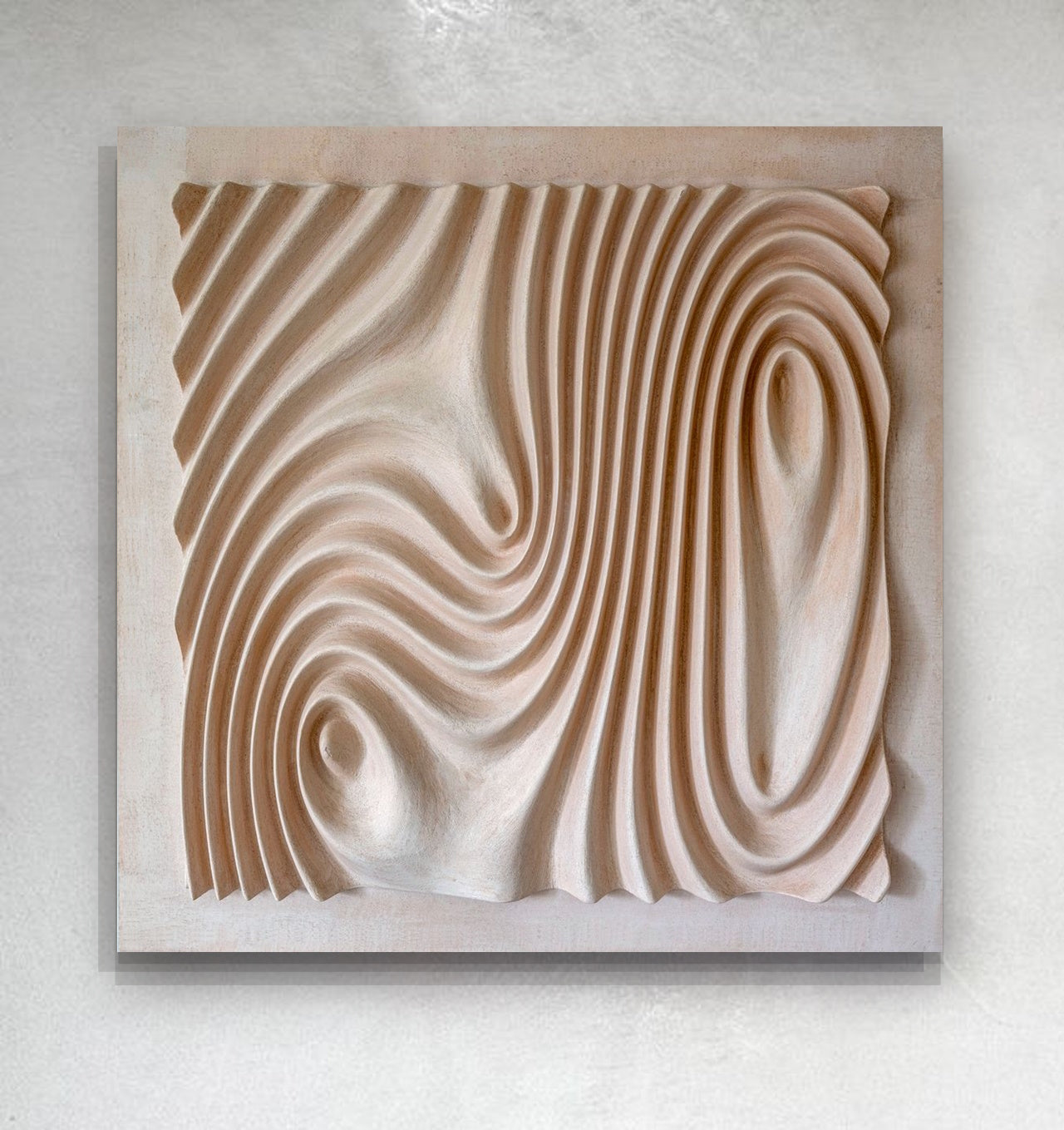
Sculptural Plaster Relief | SK Office Works Inc. | Wade Blissard Photography
One of my favorite things about this process is that we still have flexibility once we get to the job.
We have a plan and a full-size template, but our artists can move a flower, turn a leaf, add a piece, or take something away as they install it. Sometimes you just need to see it on the ceiling to know what looks best.
Sculptural Plaster Relief | SK Office Works Inc. | Wade Blissard Photography
Little by little, all of those individual pieces become one complete design.
A Lesson in Geometry
Regan & Andre Architecture Studio
This ceiling was a completely different challenge.
The oversized geometric moldings were cast in resin and applied to the ceiling. Resin gave us the crisp detail and large scale we wanted while also helping reduce the chance of cracking over time.
The hard part was making all of the geometry work.
Lights, speakers, vents, and everything else in the ceiling had to be considered before we started. You can't simply move the pattern over a few inches without affecting something else.
There is a tremendous amount of measuring and planning behind something that looks so clean and simple when it is finished.
Segreto Cast Ceiling | Regan & Andre Architecture Studio | Pintail Construction
Once the casts are applied to the ceiling, our artisans fill every joint and carefully smooth each seam so the entire surface reads as one continuous geometric design. This finishing work is still in progress and must be completely smooth, as the ceiling will receive a high-sheen paint that will reveal even the slightest imperfection.
The finished ceiling may be the ultimate reward, but there is something so special about watching each design come together—one carefully considered detail at a time.
When the Sculpture Becomes the Ceiling
Our current project with Marie Flanigan Interiors actually started with a combination of the two approaches above—a geometric molding design with cast florals applied to the ceiling.
As we worked through the samples, we started asking how we could make the florals feel less applied and more like they were growing right out of the ceiling.
Marie and her team sent us beautiful references from historic English and European interiors, which led us to dig even deeper and study more examples on our own.
The more we looked, the more we realized the change could not just be in the flowers. The ceiling itself needed to become part of the sculpture.
Instead of making individual pieces and applying them to sheetrock, we began sculpting complete ceiling panels.
The background, geometric framework, vines, leaves, and flowers are all created together so the surface can rise, flatten, overlap, and move naturally from one element to the next.
Once cast, these panels will be installed as the ceiling itself. Each one is being customized to this room so the sections line up precisely with the surrounding moldings and architectural details.
The ceiling is still in production, but we already love where this direction has taken us. What began as a combination of geometric molding and applied florals has evolved into something much more sculptural and completely unique to this home.